Sturn V Cant Be Made Again
On this day l years ago, human beings embarked on a journey to prepare foot on some other world for the very first time.
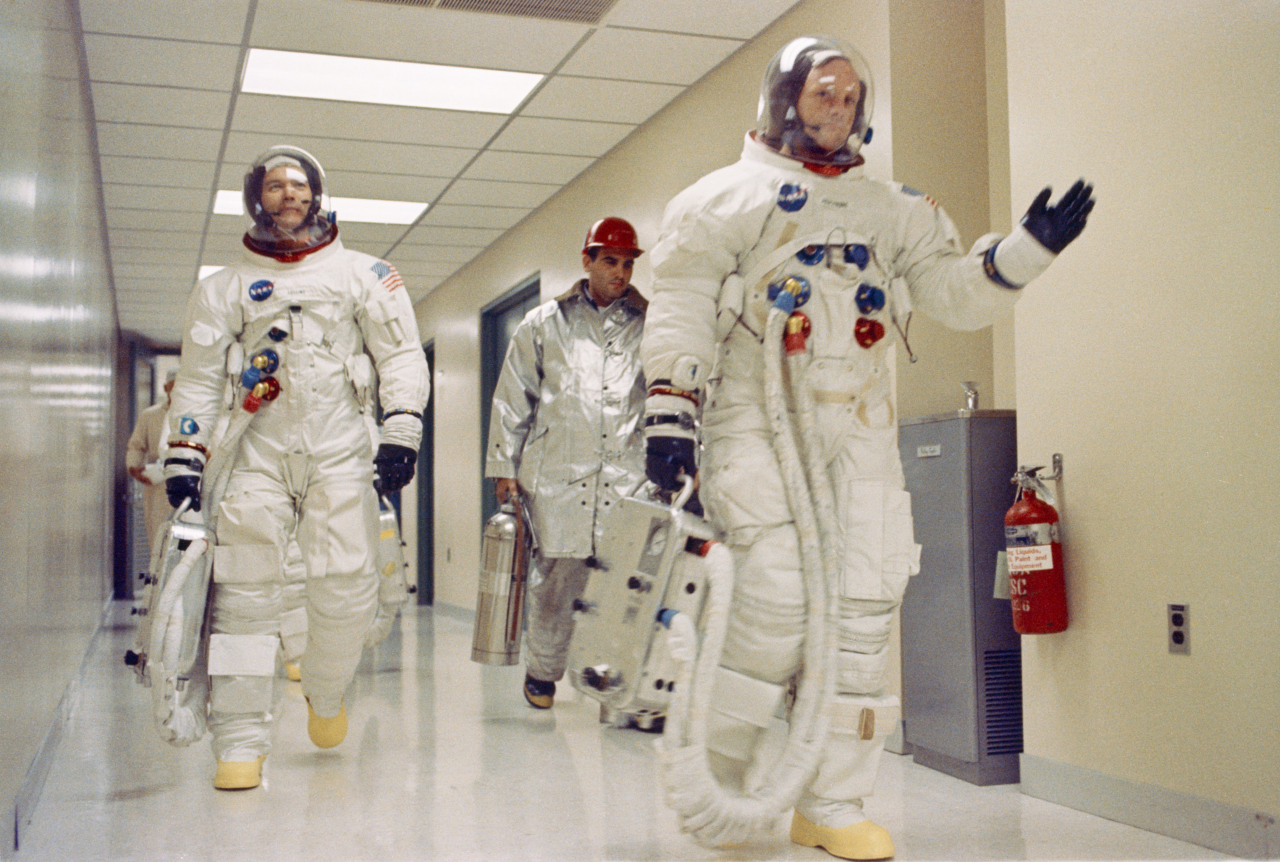
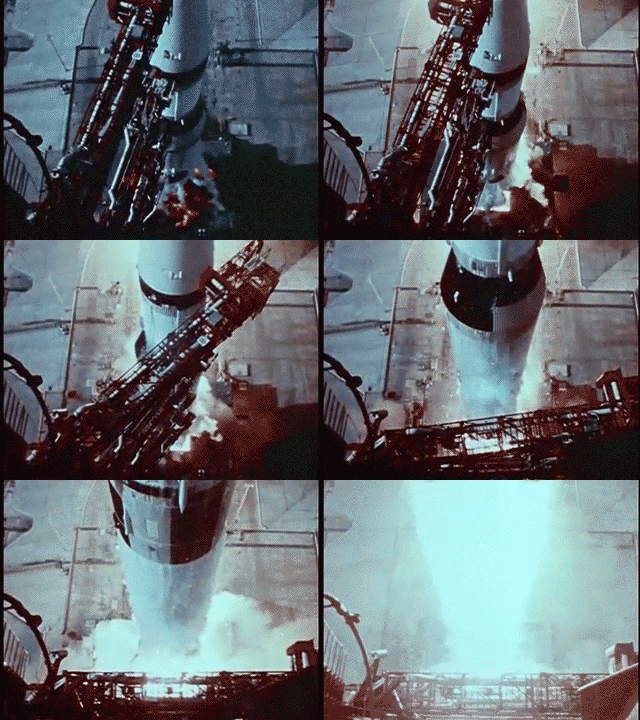
At 9:32 a.m. EDT, millions watched every bit Apollo astronauts Neil Armstrong, Buzz Aldrin and Michael Collins lifted off from Launch Pad 39A at the Kennedy Space Eye in Cape Canaveral, Florida, flight high on the near powerful rocket ever built: the mighty Saturn V.
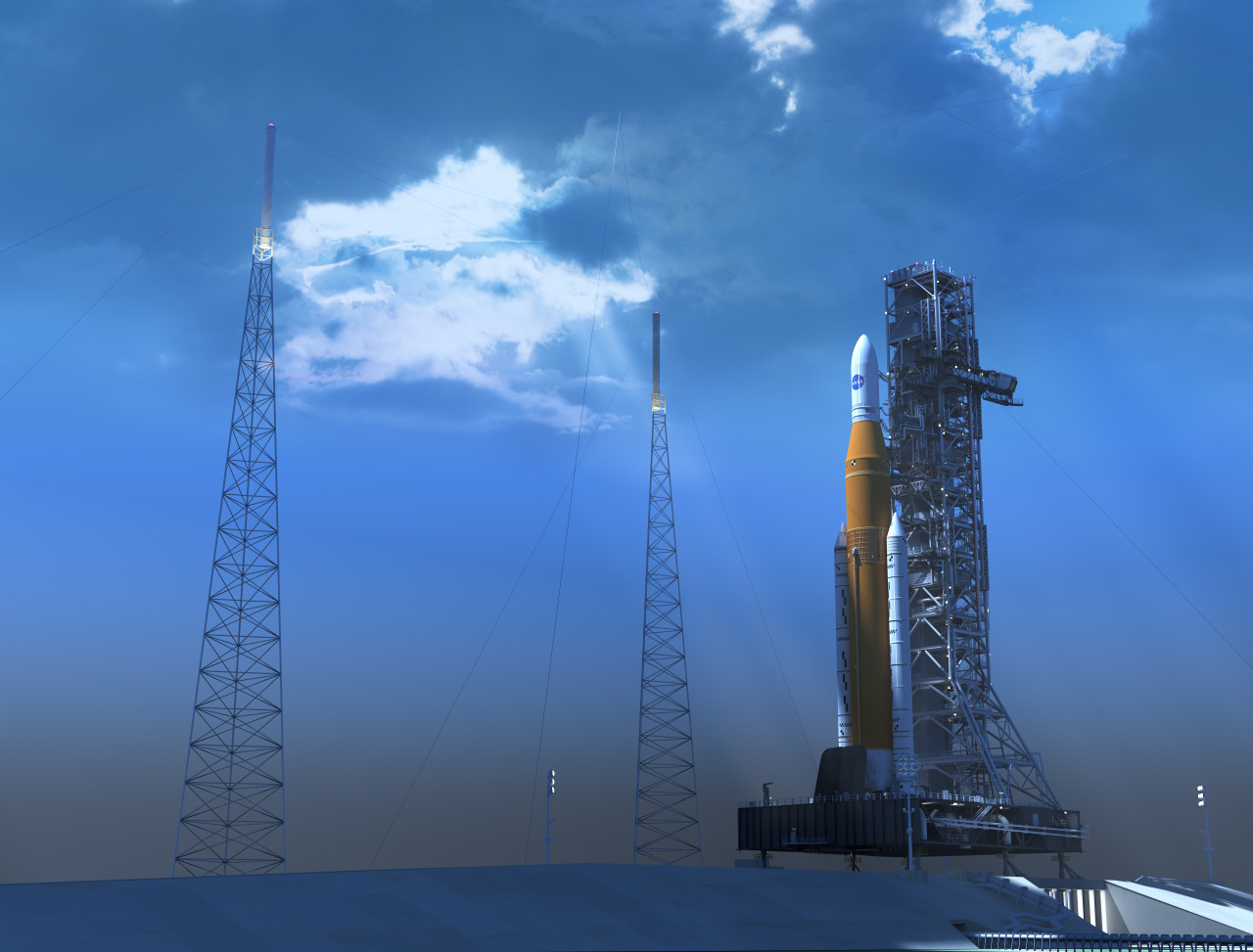
As we set up to return humans to the lunar surface with our Artemis plan, we're planning to brand history again with a similarly unprecedented rocket, the Space Launch System (SLS). The SLS will be our first exploration-class vehicle since the Saturn V took American astronauts to the Moon a decade ago. With its superior lift adequacy, the SLS volition aggrandize our attain into the solar organization, allowing astronauts aboard our Orion spacecraft to explore multiple, deep-space destinations including about-Earth asteroids, the Moon and ultimately Mars.
Then, how does the Saturn V measure up half a century subsequently? Permit's accept a look.
Mission Profiles: From Apollo to Artemis
Saturn V
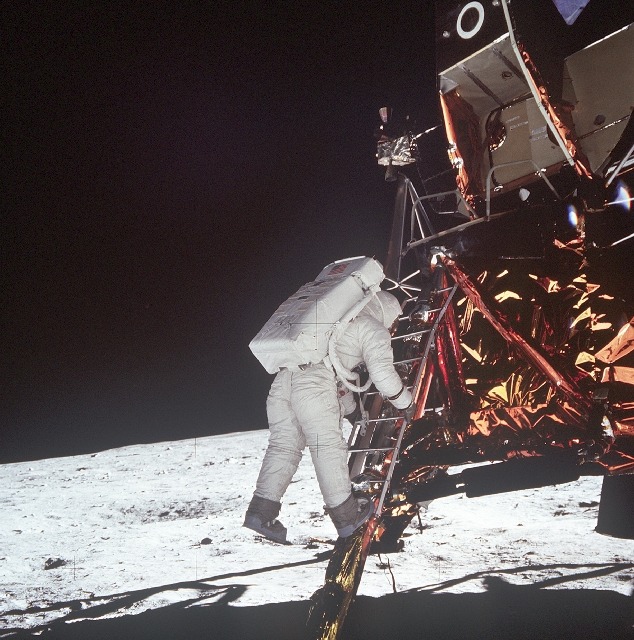
Every man who has ever stepped foot on the Moon made information technology there on a Saturn V rocket. The Saturn rockets were the driving forcefulness behind our Apollo programme that was designed to land humans on the Moon and return them safely back to Earth.
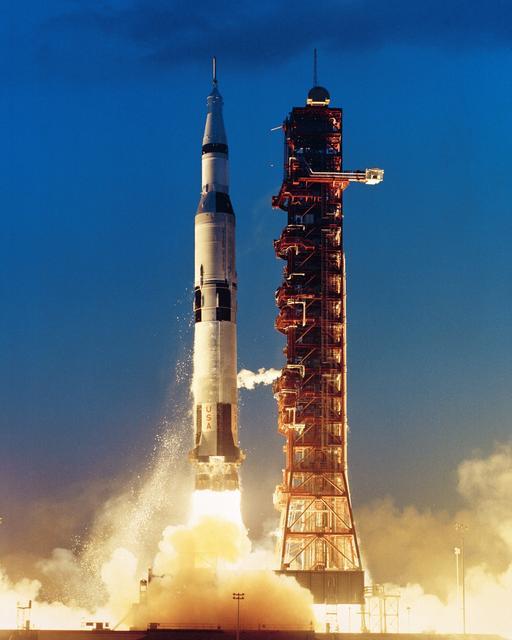
Developed at our Marshall Space Flight Center in the 1960s, the Saturn V rocket (V for the Roman numeral "5") launched for the get-go time uncrewed during the Apollo 4 mission on November 9, 1967. One yr later, it lifted off for its offset crewed mission during Apollo 8. On this mission, astronauts orbited the Moon but did not country. So, on July sixteen, 1969, the Apollo xi mission was the first Saturn V flight to land astronauts on the Moon. In total, this powerful rocket completed 13 successful missions, landing humans on the lunar surface six times before lifting off for the last fourth dimension in 1973.
Space Launch System (SLS)
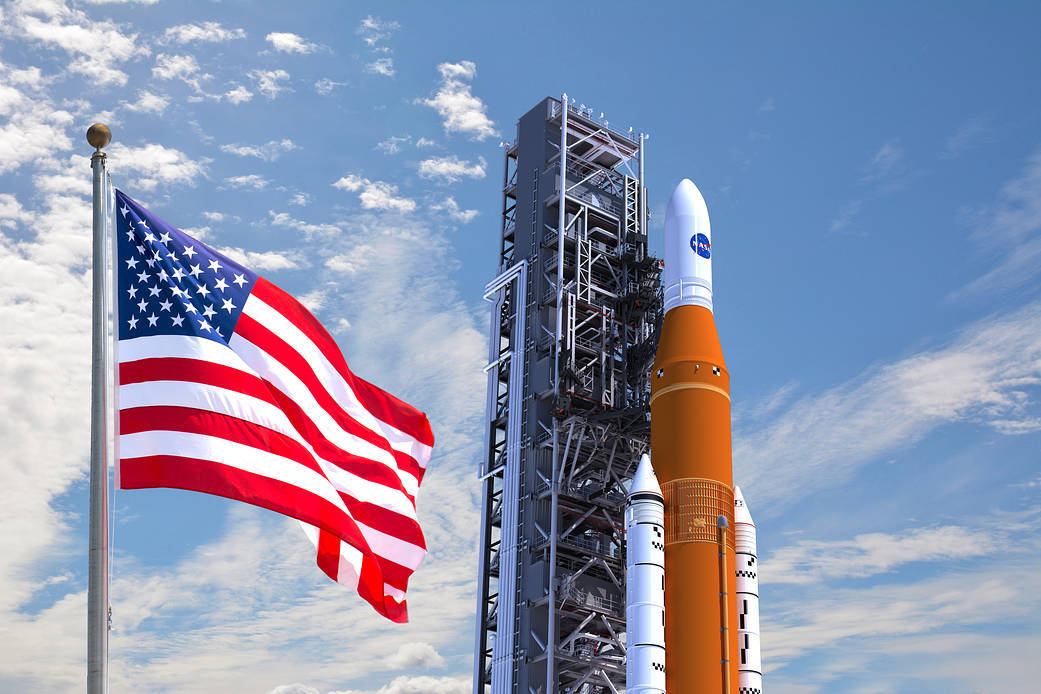
Just as the Saturn V was the rocket of the Apollo generation, the Infinite Launch Organisation will be the driving force behind a new era of spaceflight: the Artemis generation.
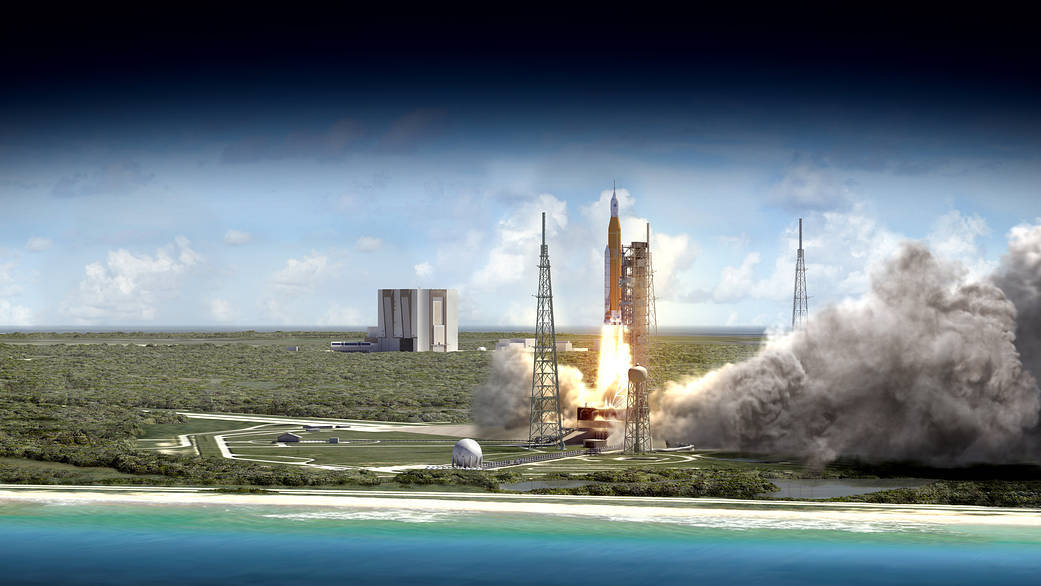
During our Artemis missions, SLS will have humanity farther than ever earlier. It is the vehicle that will render our astronauts to the Moon by 2024, transporting the first woman and the side by side man to a destination never earlier explored – the lunar Due south Pole. Over time, the rocket will evolve into increasingly more than powerful configurations to provide the foundation for human exploration beyond Earth'southward orbit to deep infinite destinations, including Mars.
SLS will take flight for the first time during Artemis ane where it volition travel 280,000 miles from Globe – farther into deep space than any spacecraft congenital for humans has always ventured.
Size: From Big to BIGGER
Saturn V
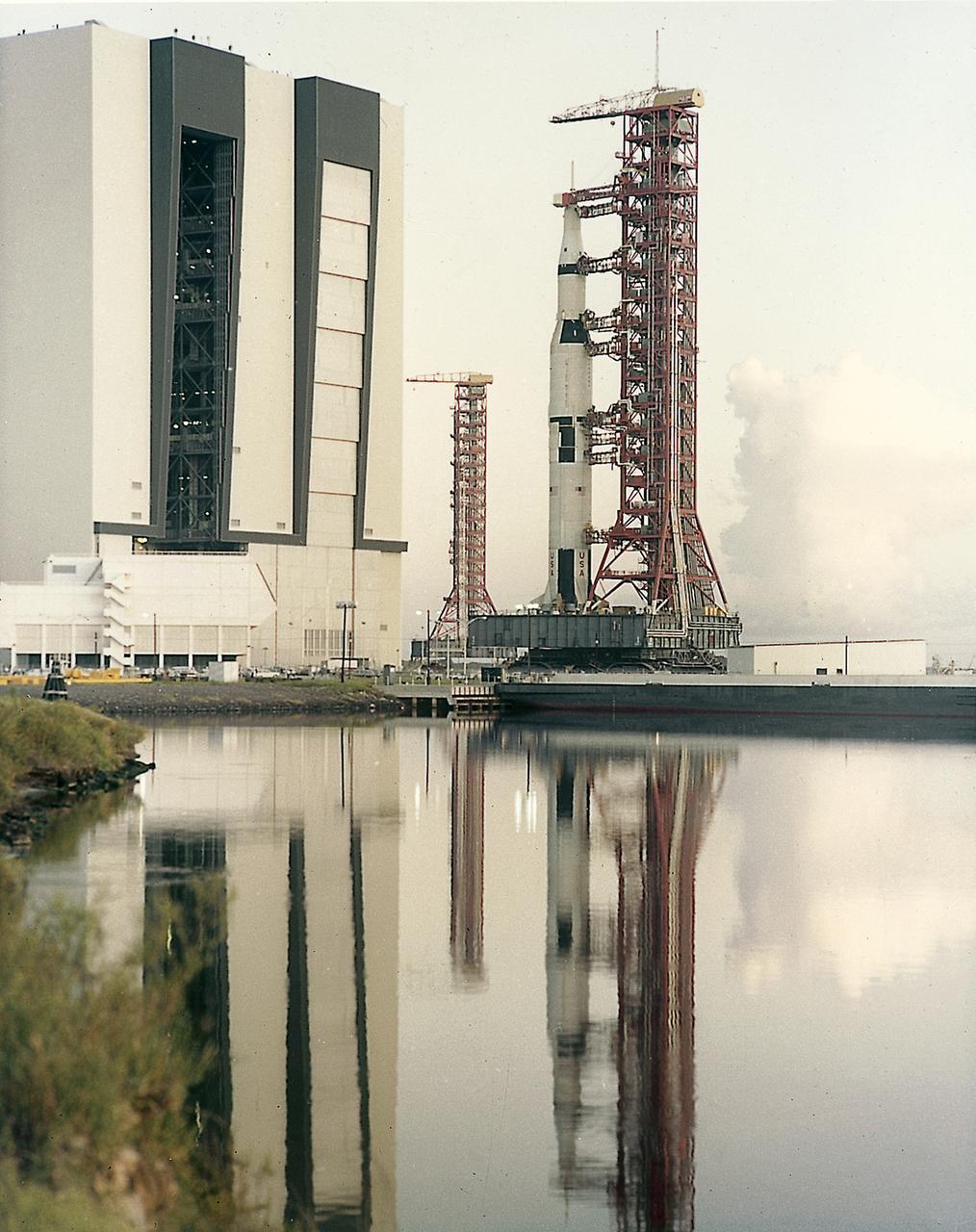
The Saturn 5 was large.
In fact, the Vehicle Associates Edifice at Kennedy Infinite Center is i of the largest buildings in the earth by volume and was congenital specifically for assembling the massive rocket. At a pinnacle of 363 feet, the Saturn V rocket was near the size of a 36-story building and lx feet taller than the Statue of Freedom!
Infinite Launch Organization (SLS)
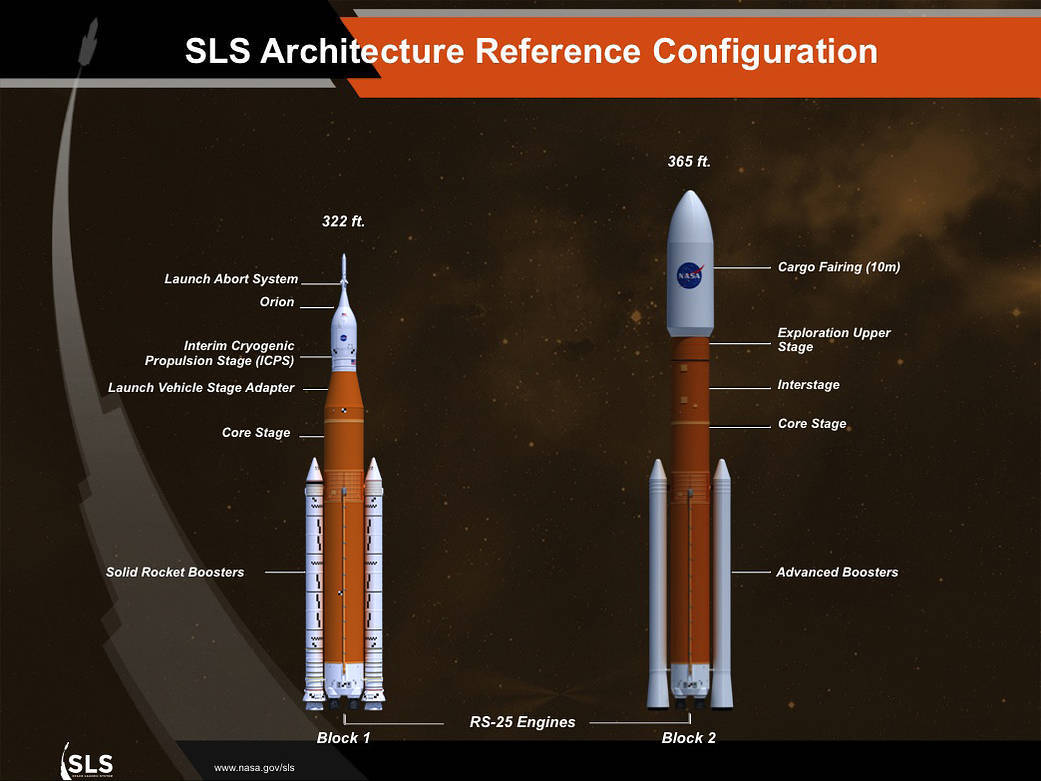
Measured at only 41 feet shy of the Saturn Five, the initial SLS rocket volition stand up at a height of 322 feet. Because this rocket volition evolve into heavier lift capacities to facilitate coiffure and cargo missions beyond Earth'south orbit, its size will evolve as well. When the SLS reaches its maximum elevator capability, it volition stand at a height of 384 feet, making it the tallest rocket in the earth.
Power: Turning Up the Heat
Saturn V
For the 1960s, the Saturn V rocket was a beast – to say the least.
Fully fueled for liftoff, the Saturn Five weighed six.2 million pounds and generated seven.6 million pounds of thrust at launch. That is more ability than 85 Hoover Dams! This thrust came from five F-1 engines that made up the rocket's offset stage. With this lift adequacy, the Saturn V had the ability to send 130 tons (well-nigh x school buses) into low-Globe orbit and about l tons (about 4 school buses) to the Moon.
Space Launch Arrangement (SLS)
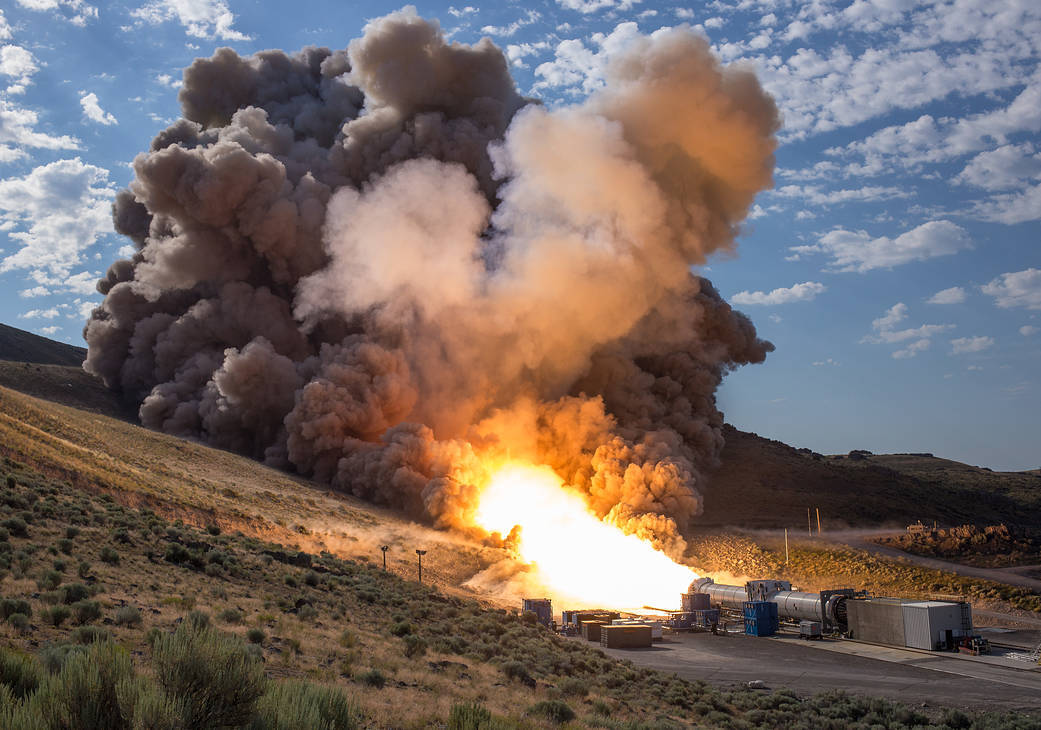
Photo of SLS rocket booster test
Unlike the Saturn Five, our SLS rocket volition evolve over time into increasingly more powerful versions of itself to suit missions to the Moon and and then across to Mars.
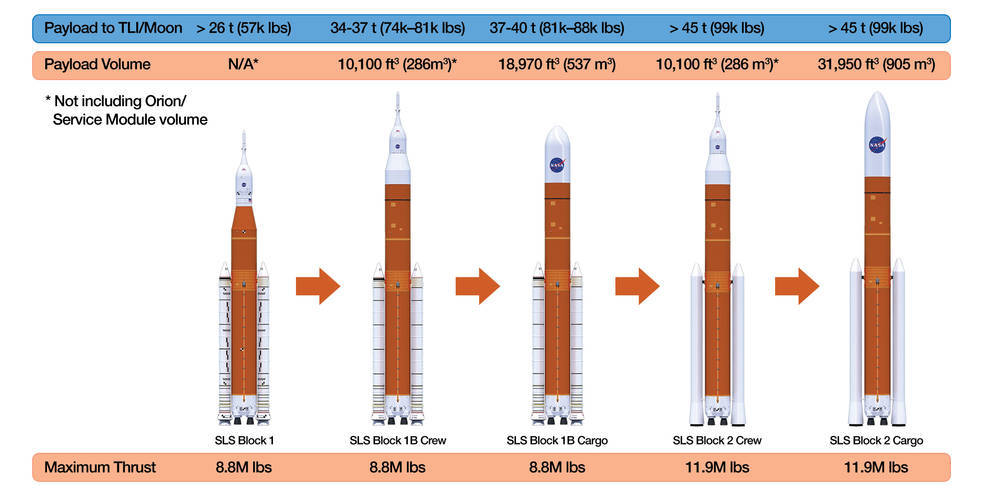
The start SLS vehicle, called Block i, will weigh v.75 1000000 pounds and produce viii.8 million pounds of thrust at time of launch. That's 15 percent more than the Saturn 5 produced during liftoff! It will also send more than than 26 tons beyond the Moon. Powered by a pair of five-segment boosters and iv RS-25 engines, the rocket volition accomplish the period of greatest atmospheric force within ninety seconds!

Following Cake 1, the SLS volition evolve five more times to accomplish its last phase, Block 2 Cargo. At this stage, the rocket will provide 11.9 million pounds of thrust and will be the workhorse vehicle for sending cargo to the Moon, Mars and other deep infinite destinations. SLS Block 2 volition exist designed to lift more than than 45 tons to deep space. With its unprecedented power and capabilities, SLS is the merely rocket that can ship our Orion spacecraft, astronauts and big cargo to the Moon on a single mission.
Build: How the Rockets Stack Upwards
Saturn V
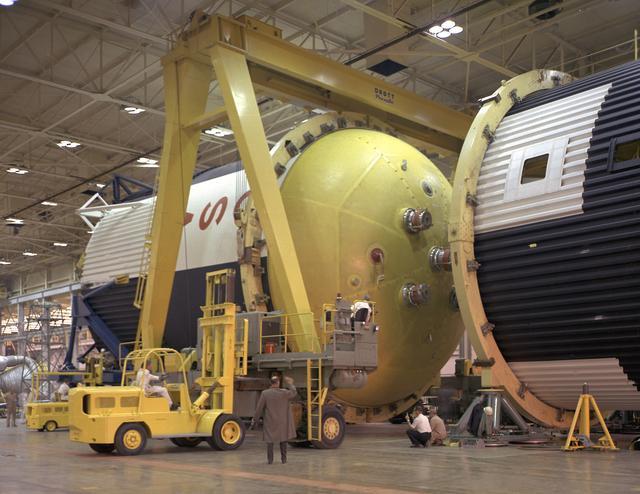
The Saturn 5 was designed every bit a multi-stage system rocket, with 3 core stages. When one system ran out of fuel, information technology separated from the spacecraft and the adjacent stage took over. The offset stage, which was the well-nigh powerful, lifted the rocket off of World's surface to an altitude of 68 kilometers (42 miles). This took only 2 minutes and 47 seconds! The first phase separated, allowing the second stage to burn and carry the rest of the stack almost into orbit. The third stage placed the Apollo spacecraft and service module into Earth orbit and pushed it toward the Moon. Subsequently the commencement two stages separated, they fell into the ocean for recovery. The third stage either stayed in space or crashed into the Moon.
Infinite Launch Arrangement (SLS)
Much like the Saturn V, our Space Launch Arrangement is also a multi-stage rocket. Its three stages (the solid rocket boosters, cadre stage and upper stage) will each take turns thrusting the spacecraft on its trajectory and separating after each individual stage has wearied its fuel. In subsequently, more powerful versions of the SLS, the 3rd stage will behave both the Orion crew module and a deep space habitat module.
A New Era of Space Exploration
Just equally the Saturn V and Apollo era signified a new historic period of exploration and technological advancements, the Infinite Launch System and Artemis missions will bring the U.s.a. into a new age of space travel and scientific discovery.
Join us in celebrating the 50th ceremony of the Apollo 11 Moon landing and hear about our future plans to get forward to the Moon and on to Mars by tuning in to a special two-hour live NASA Television set broadcast at ane p.k. ET on Friday, July 19. Watch the program at www.nasa.gov/live.
Make sure to follow us on Tumblr for your regular dose of space: http://nasa.tumblr.com.
Source: https://nasa.tumblr.com/post/186339556099/we-like-big-rockets-and-we-cannot-lie-saturn-v
0 Response to "Sturn V Cant Be Made Again"
Post a Comment